
Eric’s picture this month is all about Nina Masel – who influenced Winston Churchill’s wartime policy at 17 years of age – and her connection with Luccombe:
One recent evening, I was ‘zapping’ through the channels on my TV, when I chanced upon a programme about the London Blitz, and the words “Nina” and “Mass Observation” triggered a connection in my brain. It transpired that I was watching BBC’s docudrama “Blitz Spirit” in which Lucy Worsley narrated the stories of six Londoners who had worked and volunteered during the London Blitz of 1940-1 and had kept records of their experiences.
A later viewing of the whole programme revealed that one of the six subjects of the programme was – as I had anticipated – Nina Masel (later Hibbin), whom I had met in Luccombe in July 1987 at a barn dance at East Luccombe Farm. It was the final day’s filming for the HTV 4-part series “Exmoor Village” that had been inspired by the Mass-Observation book of the same title that had been published in 1947. The larger-than-life director, Bryan Izzard had managed to track her down as she had been one of the original Mass Observation observers who had stayed in Luccombe towards the end of World War Two and had secretly recorded the minutiae of village life.
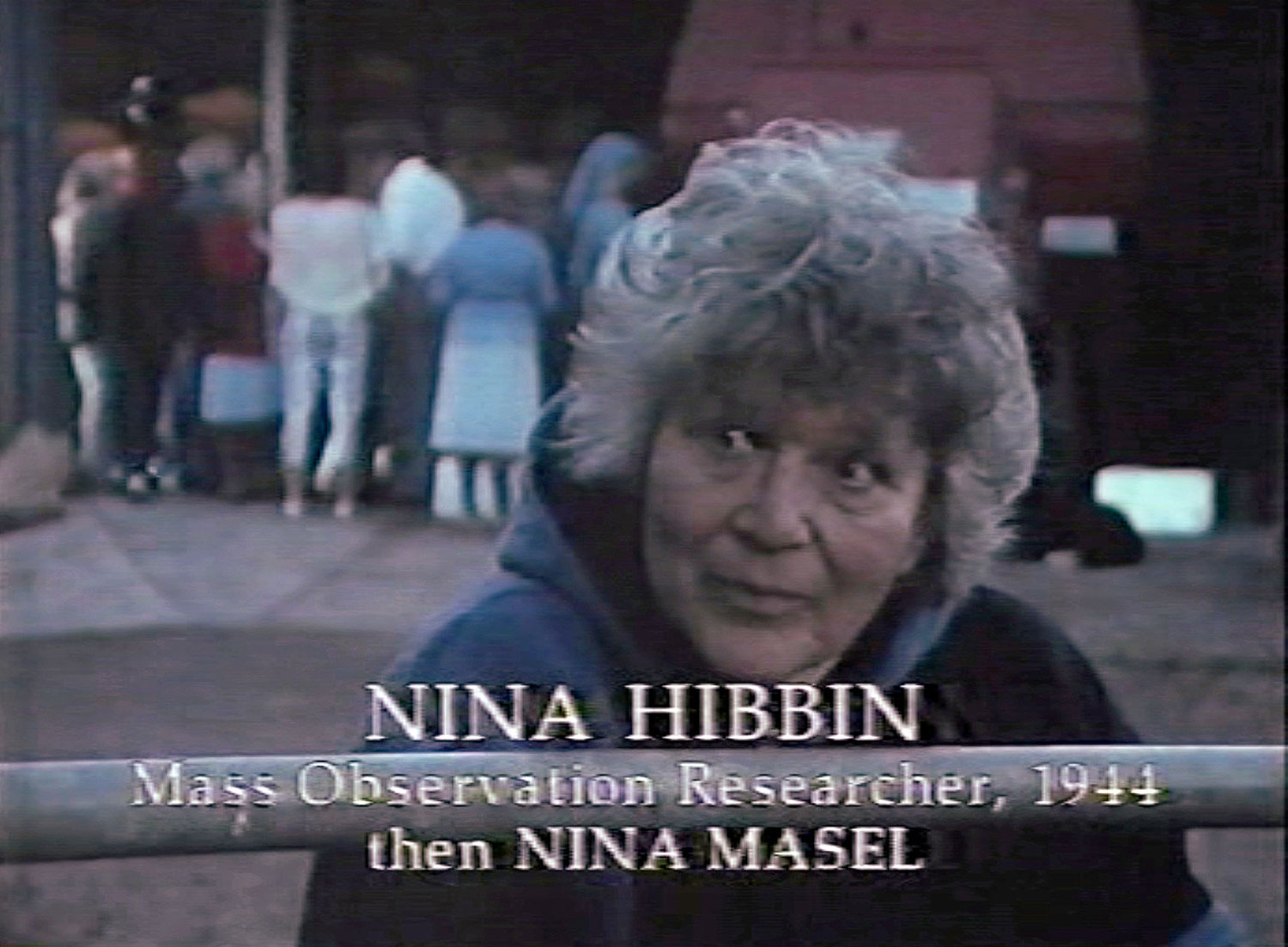
A still from the HTV documentary
Most of the original work had been done by a new MO recruit, Desiree Ivey, who, according to records of communications with her superiors, seemed to have a sketchy idea of what was expected. She spent almost two months in Luccombe, but most people soon realised what her motives were and considered it most peculiar. “Some of the detail you ask for is very personal,” she protested to London, “and the people resent it.” Towards the end of her stay, she was joined by the far more experienced Nina, who helped to knock the material that Desiree had collected into shape,
(Mass Observation was founded in 1937 with the aim of recording everyday life in Britain using a team of some 500 volunteer observers who kept diaries and completed questionnaires; in addition there were a number of paid investigators who anonymously recorded conversations and behaviour both at work and in other situations.)
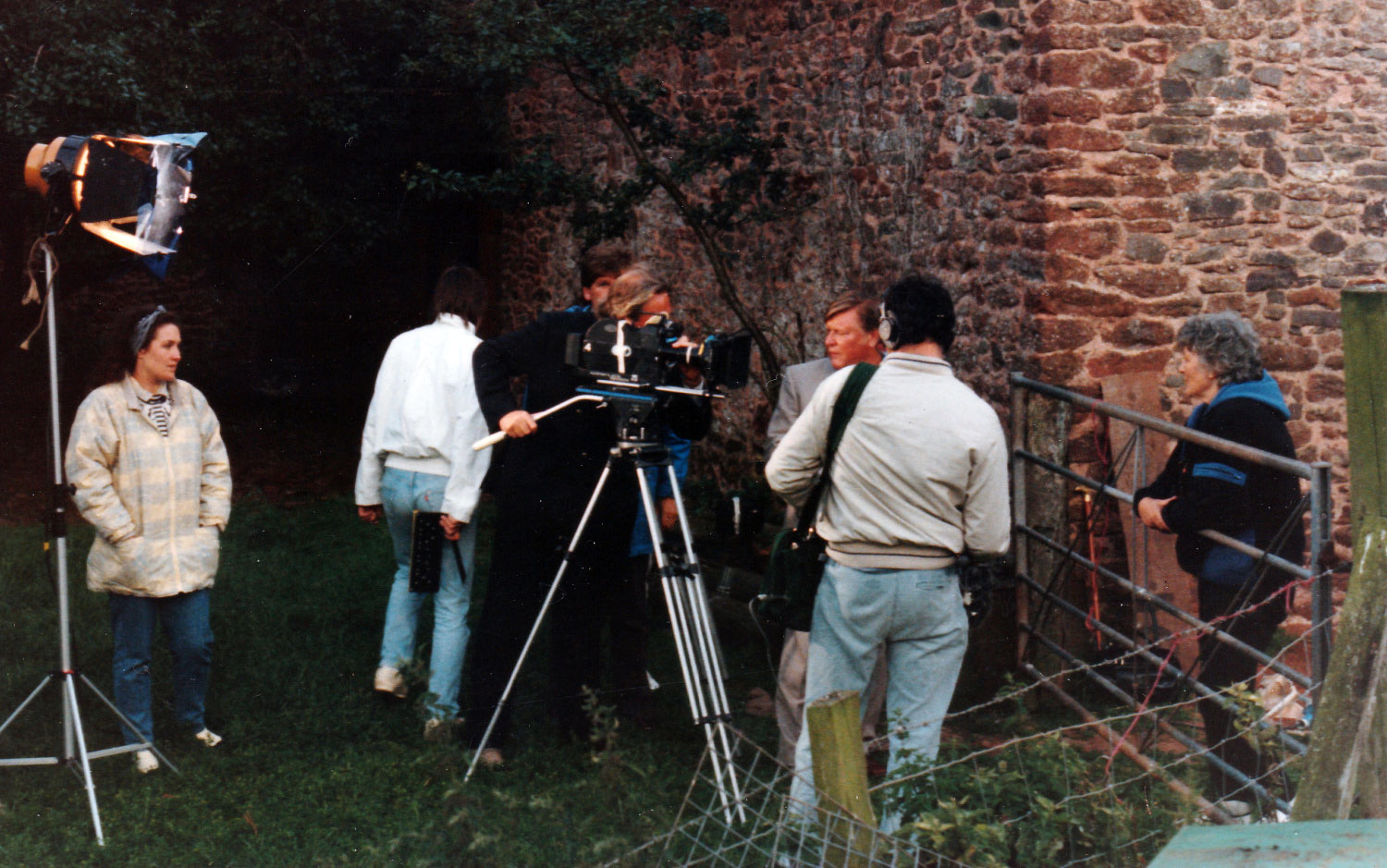
A crew filming the HTV documentary with Nina Hibbin in Luccombe
Nina Masel was born in Romford, Essex in 1922. Her family were Jewish and originated from Eastern Europe. She enrolled with Mass Observation as a volunteer diarist but was soon employed full-time by them earning £3 a week, and at only 17 she left home and moved to Stepney in London’s East End, initially working as an investigator on a project collecting information about the public’s reaction to wartime posters. After successfully completing this work, she was moved on to more challenging studies: working in the East End of London reporting on anti-Semitism; taking refuge in public Air-Raid shelters and simultaneously exposing their poor conditions. She was known particularly for her accounts of the enormous and notorious Tilbury air raid shelter in Stepney. “The first time I went in there, I had to come out,” she wrote. “I felt sick. You just couldn’t see anything; you could just smell the fug, the overwhelming stench… There were thousands and thousands of people lying head to toe… The place was a hell hole.” Part of Nina’s account was published by the New Statesman and caught the eye of Winston Churchill, who insisted that conditions in the Tilbury Shelter be improved immediately. Shortly afterwards, the Government removed its ban on London’s underground stations being used as communal air-raid shelters.
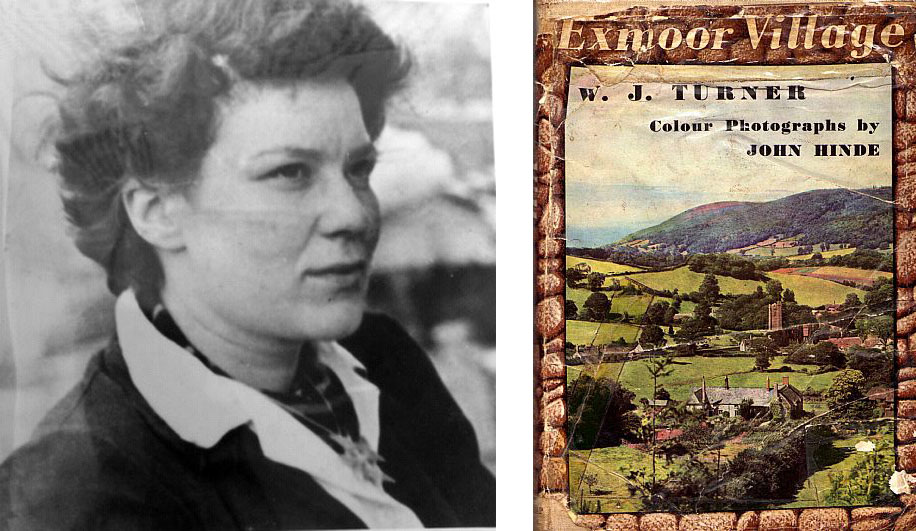
Nina Masel and the ‘Exmoor Villag’e book detailing the mass observation.
Nina was highly opposed to Mass Observation’s ties with the Ministry of Information, however, describing the link as an “act of betrayal”. A report that she had made about the poor safety record of surface-built air raid shelters had been manipulated to make it appear that they were in fact safe, leading to her resigning from her job in 1941 in protest. She then joined the Women’s Auxiliary Air Force before finding herself in Luccombe towards the end of the war, reporting once again for Mass Observation.
After the war she trained as a teacher then in 1960, she became a member of the Critics’ Circle, the national professional body of critics for dance, drama, film, music, visual arts and architecture. She began working as the film critic for the communist Daily Worker newspaper (retitled the Morning Star in 1966). She decided to abandon film criticism in 1971, becoming the first-ever films officer for the Yorkshire Arts Association, and from 1976 to 1979, she was director of the BFI-aligned Tyneside Cinema in Newcastle upon Tyne. On her retirement, she moved to Boulby, near Staithes in North Yorkshire. There, together with her husband Eric, they ran a café beside the Cleveland Way, a popular walking track. In 2001, she moved to Saltburn. In her final years, she suffered ill – health, passing away in May 2004.
Check out all of our previous pictures of the month and read more about Luccombe’s history
Leave A Comment